Tuesday, 7 December 2010

Target Audience

Male: 40%
Color Splash KissesFemale: 60%
Age Group: Teenagers 16-19

Brands:
Clothes: Animal, Roxy, Diesel 
Shoes: Converse, Doc Martens
Alcohol: Cider, spirits


Bands:
Radiohead
Kings of Leon
Kasabian
Hed PE 


Film and T.V.:
Film: Lock Stock and Two Smoking Barrels, TrainSpotting, Donnie Darko, Kidulthood,Sweet Sixteen, Fight Club, Pulp Fiction, Psycho, Reservoir Dogs, American History X.

T.V:  Skins, Shameless, Being Human, Spaced, Blackbooks, Man Stroke Woman, Mock the Week, Never Mind the Buzzcocks

Demographic:

My film is mainly aimed at females, aged 16-19


The socio-economic scale
http://www.examstutor.com/pictures/spacer.gif
Social grade
http://www.examstutor.com/pictures/spacer.gif
Description of occupation
http://www.examstutor.com/pictures/spacer.gif
Example
http://www.examstutor.com/pictures/spacer.gif
A
http://www.examstutor.com/pictures/spacer.gif
higher managerial, administrative or professional
http://www.examstutor.com/pictures/spacer.gif
Company director
http://www.examstutor.com/pictures/spacer.gif
B
http://www.examstutor.com/pictures/spacer.gif
intermediate managerial, administrative or professional
http://www.examstutor.com/pictures/spacer.gif
Middle manager
http://www.examstutor.com/pictures/spacer.gif
C1
http://www.examstutor.com/pictures/spacer.gif
supervisory, clerical, junior administrative or professional
http://www.examstutor.com/pictures/spacer.gif
Bank clerk
http://www.examstutor.com/pictures/spacer.gif
C2
http://www.examstutor.com/pictures/spacer.gif
skilled manual workers
http://www.examstutor.com/pictures/spacer.gif
Plumber
http://www.examstutor.com/pictures/spacer.gif
D
http://www.examstutor.com/pictures/spacer.gif
semi- and unskilled manual workers
http://www.examstutor.com/pictures/spacer.gif
Labourer
http://www.examstutor.com/pictures/spacer.gif
E
http://www.examstutor.com/pictures/spacer.gif
state pensioners with no other income, widows, casual and lowest grade earners
http://www.examstutor.com/pictures/spacer.gif
Unemployed


My film will be aimed at B, C1 and C2.

Psychographic
·         Mainstreamers: people who don’t like to be different but are conventional in their tastes and aspirations
·         Traditionalists: people who don’t like change and are very
       set in their ways
·         Hedonists: people who just want to have a good time
·         Individualists: people who want to stand out from the crowd
       and like to think for themselves
·         Rebels: people who don’t want to conform but challenge the traditional way of doing things.


My film will be aimed at Rebels, Hedonists and Individualists.

Thursday, 2 December 2010

Genre Moodboard

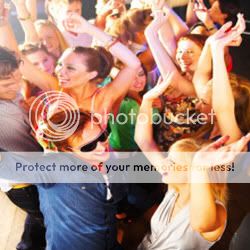
This is a moodboard of my target audience, it shows things that my ideal audience like and enjoy. These are the type of thing I would aim to show or connote in my film.

Wednesday, 1 December 2010

First Ideas


The genre I have decided to work in is Teenage drug drama. I will be looking at films like Trainspotting, Kidulthood and sweet sixteen to get ideas and inspiration.  
My film will be targeted at teenagers. People who enjoy the idea of rebellion and excitement.
I would like my film to portray the struggle of being a teenager but also to show a more sensitive side, that the people in the film aren't all bad. I would like to be able to use enigma codes and possibly binary opposites. 
My film opening will be restricted narration, following only one main character, I want my opening to have a slightly sinister tone but with some sadness in it. 
My film will be set in a rural environment as opposed to an urban one, although this is different from the normal environment this genre is set in I want to show that teenager in rural environments often rebel because they have nothing to do and are bored. 


From Script to Screen

The creative ideas for Dexter came from the idea of crime scene photographs; they contextualise mundane things and make them appear sinister, they then began examining normal everyday things and  seeing how they could contextualise them to make them seem horrific or sinister.

 This fit in with the idea of Dexter as a character because on the surface these objects look normal and mundane but if you change them slightly you can find something strange and sinister, this applies to Dexter as a character as well, on the surface he seems like a normal man but underneath he is actually a serial killer. This is also how the style of the name came about, most of the letter look the same if you turn them upside down, it wasn't massively changed, but you could tell it was slightly wrong, like Dexter when he becomes the killer.

In the opening sequence of Dexter there are lots of extreme close-ups, this makes the normal activities of shaving and eating breakfast seem quite threatening and sinister, there is something twisted and violent about these normal, mundane activities .

The use of noir lighting gave the sequence a dark and twisted look, it connotes danger and suspicion, also the shallow depth of field gives the objects a slightly odd, unfocused look, this shows the audience that Dexter is about twisting and changing normal things to make them seem different and violent.

The Xploding Plastix track made the sequence seem too dark and sinister, it didn't properly connote the meaning of Dexter: it isn't all about violence, Dexter is, at times, a normal person. The other track connoted this well because it contrasted what was happening on the screen. The filming shows violence but the music suggests something more upbeat and interesting. This contrast portrays the two different sides of Dexter himself.

Tuesday, 23 November 2010

Research: Analysis of the opening of Juno

The font used for the titles shows the indie style of the film. The scribbled titles show that the film is going to be light hearted and good fun and a bit quirky. The writing also connotes childishness, so the audience can guess that growing up might be a theme in the movie


The acoustic music also gives an indie feel to the movie; it also gives it an upbeat feel, so the audience can tell it is going to be quite a happy film with some elements of comedy.

The hand drawn style shows that Juno is a quirky character. The audience can tell that Juno is going to be an interesting character because she is all in colour but everything else is quite bland and plain, this shows that Juno’s life is quite simple; it’s all bland colours, whereas she is bright and colourful and lives in a world of her own.


The bottle of Sunny D also connotes childishness; it shows that Juno is unconventional and individual, just because she is supposed to be more grown up doesn’t mean she will act grown up; because the Sunny D bottle has also got lots of colour it shows that the childish side of her is very important in the film. 


This shot shows that Juno is a world of her own and is completely removed from the rest of life, the fact that she is walking one way and the runners are going the other way shows that she doesn’t fit into the norm, that she is different from the rest of the people her age and does her own thing her own way. Also because she doesn't acknowledge the runner it shows that she doesn’t really pay attention to the boring, average things around her. 


Key Conventions

One of the main points of opening credit sequences is to introduce the main cast and crew.  The title sequence should also introduce an indication of how the narrative might work out. Opening sequences often use enigma codes such as seen in Brick to set up questions that the audience want to find out the answer to or they can establishes disruptions such as seen in London to Brighton that the audience will want to see resolved. Title sequences should also introduce key characters and tell the audience something about them such as Dave from Kick Ass who during the exposition sequence is shown to be lacking in female company. It should give you an idea of the Genre of the film - e.g. Kick Ass - by the end of the opening credit the audience has established that it is a teen comedy. It should also show Binary opposites, like in Shifty - the 'hero' is always in a close up shot and has lots of screen time whereas the man who is unpacking heroine has minimal screen time and the audience can't see his face properly. This positions the audience to get to know the hero more.


Typically, an opening sequence will contain:
  • Details of cast and crew.
  • The film's title.
  • Production companies
  • An introduction to character or character type.
  • Indication of place and time.
  • Information regarding mood and tone.
  • Information about genre.
  • Questions that the viewer finds intriguing. (sets up questions or enigmas)
  • Narrative expectations – what is likely to happen in the film?
  • Links to narrative theories

There may also be:
  •          Flashbacks
    ·         Voice Over
    ·         Exposition
    ·         Patterns and types of editing that will be echoed in the remainder of the film.
    ·         Mise en scene and cinematography that will be echoed or elaborated upon later in the film.
    ·         Introduction to signature theme tune.


Thursday, 18 November 2010

Main Task

Our task is to create the titles and opening of a new fiction film lasting a maximum of two minuets.
we need to complete this project by the following dates:

Research Deadline: 26/11/10

Photo-storyboard Deadline: 3/12/10

Filming Deadline: 07/01/11

Production Deadline: 28/01/11

Evaluation Deadline: 11/02/11

Friday, 15 October 2010

Evaluation

Continuity Editing:
Continuity editing is used to make the audience believe they are part of the stories world, it is used to get they audience to forget they are watching T.V and think that they story is real. Continuity editing must not get in the way of the narrative.


Digital SLR Camera's
We used the DSLR camera to take photos so we could make our storyboards. I found the camera's easy to use but did not use many of the different functions; only the automatic setting. We then uploaded the images on to photoshop and created our storyboard.

Organisation
I wasn't as organised as I could have been, if I was to do it again I would choose better locations, people who have more experience with being filmed so my production would look more professional. I would also try and spend more time filming and editing so I could get better shot and add more effects.

Filming 
I was quite confident using the digital video camera, I found it easy to work and the functions easy to use. I didn't get chance to use many of the functions, I only really got to use the zoom, if I could do it again I would try to use more functions.

Uploading
We transferred the footage from the video camera to the computer using On Location, we then exported this and opened it into Premier Pro.

Editing
We used Premier Pro to edit our production, we used the cutting tool so our clips were the right length and to cut out bits that weren't relevant or filmed well enough. I found Premier Pro very easy to use and I was very pleased with the outcome. I also used some of the different effects, I made the flashback clip black and white and added ghosting the make it seem blurry and seem more like a memory.

Uploading
We used YouTube to upload our video on to the internet, we then embedded the URL into a blog post.

Blogger
I found Blogger really useful to help present this project, it's easy to work and easy to organise, you can present things creatively, it's easy to go back over work and make alterations and it's easy to access. 

Thursday, 14 October 2010

Post-Production

The editing process was quite complicated to start with but became easier when I got used to the technology. I found On Location difficult to use but I found  Premier Pro a lot easier. It was sometimes awkward to cut down the shot to the exact moment but I liked adding the effects to my production.


Production

Filming:


Filming actually turned out to be quite a difficult process, because of the location it was hard to get privacy and there were a few disruptions. It was sometimes difficult to get the exact shot we needed and we had to shoot different shots several times from different angles to get the right effect. Sometimes it was difficult to stay focused and we found we had to re-film most scene several times until we got the script and location correct. There wasn't a lot of control over things like lighting, which effected the filming sometimes.

Pre-Production Task

Before we started filming we had to storyboard our film, write a script and decided on locations, we also had to complete a risk assessment form.
This is our storyboard:

We had to storyboard our sequence so we knew they layout of the story when we were filming, so we knew what shot types we wanted to use and so we had a general base to work from.


We wrote a script so our actors knew what to say and so our story made sense.
This is our script:
Girl one walks down a corridor, opens a door, goes in and sits down beside girl 2
Girl 2: How are you feeling?
Girl 1: Not great you?
Girl 2: I'm fine, I'm just worried about you.
Girl1: I just keep seeing the accident over and over again.
Cut away to girl lying on floor in front of car, two other girls run over to her.
cut back to the two girls talking.
Girl 2: I wish I could help you
Girl 1 : Don't worry about me.
Cut in to Girl 2's hand on Girl 1's hand.

Scouted locations:
we decided to use one of the media classrooms in college of the sequence of the two girls talking because it was easy and accessible. We used the college car park for the shot of the accident because we wanted it to look like Girl 1 had been hit by a car but it would be far to dangerous to lye in the middle of a road.

Casting:
We had to consider who we were going to use in our production.

Risk assessment:
We had to consider what potential risks were involved during filming, we had to calculate how dangerous they could be and how likely there were to happen if a risk potential scored too high we would have to change what we were filming/location to suit the risk assessment better. Some of our potential risks were things like people tripping over tripods or equipment cases. One of our main risks was the shot of the girl lying in the road because there was a chance she could actually be run over, so we can to consider our filming time and location carefully.

Monday, 27 September 2010

Continuity Editing

"Continuity Editing is the predominant style of film editing practised by Hollywood editors.The goal of continuity editing is to make the work of the editor as invisible as possible so as to make you forget you're watching a TV show and immerse yourself more fully within the programme."


The purpose of continuity editing is to make the audience believe they are part of the world. Continuity editing must not get in the way of the story telling. It's purpose is to get the audience to suspend their disbelief and get carried away in the story.


The 180-degree rule refers to two characters facing each other never appearing in the same half of the frame. If they do not remain in their frame the spacial continuity of the scene will will be broken and the audience made aware of the constructed nature of the text.


The match on action cut occurs when two pieces of footage of the same thing that are filmed or framed differently are edited together.

The 30-degree rule involves changing the angle of the camera to film the same thing by at least 30 degrees to prevent producing a jump cut which will disrupt the flow and narrative. Unless a jump cut is being intentionally used.


The eye-line match is where footage is matched to the eye line of the character doing the looking.


Certain shot types should be used to establish the audiences spatial understanding of the scene; Establishing shot, shot/reverse shot etc.